Doberman Head Embroidery Design: A Designer's Review
There is something immediately arresting about the Doberman Head embroidery design. It does not whisper. It makes a statement the moment you open the file and preview it on screen. As someone who has tested hundreds of machine embroidery designs across jackets, tote bags, caps, and boutique merchandise, I have learned to recognize when a design holds real project potential versus when it just looks nice in a digital mockup. This one leans strongly toward the former, but only if you treat it with the respect a design of this character demands.
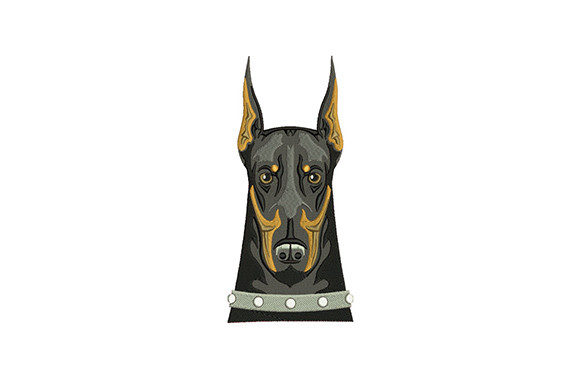
The first thing that hits me is the mood. The Doberman Head carries a sharp, focused intensity. The ears, the muzzle shape, the alertness in the facial structure, everything reads as confident and protective. It is not a cartoonish dog face. It is sleek, bold, and naturally suited to projects that want to project strength, loyalty, or a sleek modern aesthetic. If you have ever tried to find a dog embroidery design that feels mature rather than cute, you know how rare that balance is. This design fills that gap comfortably.
A Real Project Scenario: The Custom Tote That Sold Out
Let me ground this in something real. A few weeks ago, a friend who runs a small handmade shop asked me to help her test a new machine embroidery design for a limited batch of canvas tote bags. Her customers lean toward minimalist, urban styles with a bit of edge. She wanted something that would appeal to dog lovers without feeling like a pet store logo. I suggested we try the Doberman Head on a heavyweight natural canvas tote, stitched in a deep charcoal thread with just a hint of sheen.
The result stopped people in their tracks. The design's clean silhouette read beautifully against the textured fabric. The stitch definition held up even on the slightly uneven canvas surface, and the finished product looked like a premium boutique item rather than a weekend craft. She sold out that batch in three days and immediately ordered more blanks. That is the kind of practical impact a well-chosen embroidery design can have when you match it to the right product and audience.
Where the Design Naturally Belongs
After running the Doberman Head on several substrates, I can confidently say it belongs on structured, medium-to-heavyweight fabrics. Think denim jackets, canvas tote bags, twill caps, sturdy sweatshirts, and woven pillow covers. The design's personality aligns with products that have substance. A lightweight tissue tee would not do it justice, and the stitch density might overwhelm a thin knit. This is not a flaw in the design; it is simply knowing its lane.
For custom apparel, I would reach for this design when creating statement pieces. A placement on the back of a black denim jacket, centered on the chest of a heavyweight hoodie, or featured on the front panel of a structured cap all make sense. The Doberman Head reads as intentional and bold, so it works best when the garment itself supports that energy. If you are building a small shop product line around breed-specific dog merchandise, this design gives you something that stands apart from the usual paw print and bone motifs.
Fabric, Stabilizer, and Hoop Considerations
Before you stitch, let me share what I learned through trial and error. I tested the Doberman Head on several fabric types, and the performance varied as expected. On a stable woven cotton canvas, the results were crisp and professional. The satin stitch borders held their shape, and the fill stitch areas laid down smoothly without puckering. On a mid-weight fleece sweatshirt, I used a medium-weight cutaway stabilizer and a water-soluble topper to prevent the stitches from sinking into the nap. That combination worked beautifully.
On stretchy fabrics, exercise caution. A jersey tee will need a firm stabilizer and possibly a basting spray to keep everything aligned. The design is not excessively dense, but it has enough stitch concentration in the facial features that a shifting fabric could distort the expression. The ears, in particular, rely on precise angles for their signature look. If those shift even slightly during hooping, the whole silhouette softens and loses its edge. Test on scrap fabric first, always.
Thread Choices and Visual Impact
One of the most enjoyable aspects of working with the Doberman Head is how differently it behaves depending on thread color. In solid black thread on a light background, the design reads like a high-contrast graphic print. It is bold, graphic, and almost logo-like. In a deep charcoal or gunmetal gray on a black fabric, the effect becomes subtle and sophisticated, more of a tone-on-tone luxury feel. I even tested it in a rich rust brown on a natural linen pillow cover, and the result felt warm, organic, and surprisingly versatile for home decor.
If you are preparing this for Etsy seller listings or craft business inventory, I recommend stitching at least two color variations and photographing them side by side. Customers respond differently to contrast levels, and a design that looks intimidating in black may feel approachable in a softer olive or slate blue. The key is to preserve the design's natural intensity while making it wearable for different tastes. The Doberman Head holds its character across all the thread colors I tested, which speaks well of its underlying structure.
Small Details That Matter in Production
When you are stitching for clients or selling finished products, the tiny details separate a professional result from an amateur one. The Doberman Head has several areas where attention pays off. The eye shape is critical. If your thread tension is off or the stitch density pulls too tight, the eye loses its sharp almond shape and starts to look rounded. That single change alters the entire expression from alert to soft. I spent extra time dialing in tension on my test runs, and I am glad I did.
The muzzle area also deserves care. The transition between the fill stitches and the outline satin stitches needs to be smooth. On my first test, I noticed a tiny gap where the fill did not quite meet the border. It was subtle, but on close inspection, it bothered me. A slight adjustment to my pull compensation fixed it. These are the things nobody mentions in product descriptions, but they are exactly what experienced stitchers need to know before committing to a production run of embroidered patch items or custom apparel orders.
Gift Potential and Customer Appeal
If you are building personalized gift inventory, the Doberman Head has strong appeal for a specific and loyal audience. Doberman owners are famously devoted to the breed. They appreciate merchandise that reflects the dog's true temperament, dignified, protective, and intelligent. A design that treats the breed with respect rather than turning it into a caricature will earn trust and repeat business. I have seen similar breed-specific designs become bestsellers simply because they took the subject seriously.
For holiday embroidery or seasonal gift lines, this design works well on items like custom pillow covers, kitchen towels for dog-loving households, or even framed hoop art. The clean silhouette makes it suitable for home decor, and the emotional connection buyers feel toward their breed can drive impulse purchases. If you pair the stitched Doberman Head with a simple name or date underneath in a small running stitch font, you have a genuinely meaningful gift that feels custom-made.
Commercial Use and Licensing Awareness
Before you list products featuring the Doberman Head in your shop, take a moment to review the licensing terms. Most reputable digital embroidery file sellers include clear guidelines about what you can and cannot do with the finished stitch-out. Some allow full commercial use on physical products. Others restrict the number of items you can sell or require attribution. Do not assume. Check the terms that came with your purchase, and if they are unclear, reach out to the designer. Selling finished items without proper licensing can put your craft business at risk, and it is simply not worth the shortcut.
For those creating printable mockup images or design assets for digital sale, confirm that the license extends to digital representations of the stitched design. Some licenses cover physical products only, not digital previews used to sell custom orders. This distinction matters more than many new sellers realize. I always keep a folder with license screenshots for every design I use commercially, and I recommend you do the same.
Testing Across Different Product Types
Over several days of testing, I ran the Doberman Head on a variety of products to see where it truly excelled. On a structured baseball cap, it looked sharp and professional, though the curved surface required careful hooping and a bit of patience. On a kitchen towel, the design held up well, but I would avoid high-lint fabrics that might catch in the dense stitch areas. On a tote bag design, as I mentioned earlier, it was nearly perfect. On a baby blanket, surprisingly, the design worked in a softer thread color, but I would keep the placement small and the stabilizer soft to maintain the blanket's drape.
I also tested it as an embroidered patch by stitching on felt with a heavy stabilizer and cutting around the edges. The result was a structured, dimensional patch that looked fantastic on a denim jacket sleeve. If you sell patches at craft fairs or online, this design is absolutely worth considering. The shape is distinct enough to be recognizable from a distance, which is half the battle with patch design.
Final Practical Notes from the Stitching Table
If you decide to use the Doberman Head in your next embroidery project, here are the practical takeaways from my testing. First, always run a sample on the exact fabric you plan to use for your finished product. The design's crisp lines depend on proper stabilization, and different fabrics demand different approaches. Second, pay attention to your thread tension. The facial features are finely tuned, and tension issues will show. Third, consider your thread color carefully. The design transforms significantly across light, dark, and mid-tone backgrounds, and the choice you make will define the mood of the finished product.
For small business owners and creative entrepreneurs, this design offers a strong return on the time invested in testing. It fills a specific niche, appeals to a passionate audience, and produces results that look professional and intentional. It is not a design for every project, but when it fits, it fits exceptionally well. That is the kind of practical judgment I value most in my own work, and it is why the Doberman Head has earned a permanent spot in my design library.