Happy Mother’s Day Sun: A Designer’s Review
The First Stitch Impression
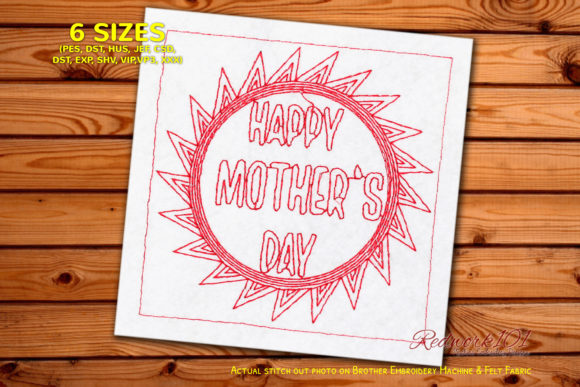
When I opened the Happy Mother’s Day Sun file, I immediately felt the warmth this design is meant to carry. It’s a redwork piece, which already sets a nostalgic, handcrafted tone. The sun motif, paired with the sentiment that we only have one sun just as we have one mother, is simple but emotionally charged. The layout is clean, with a clear focal point that doesn’t try to do too much. The optional box stitch around the design adds a frame, and the description notes that the outer box color is different—so there’s a subtle two-tone framing effect that can elevate the whole look without complicating the stitch process.
From a visual standpoint, this design lives in the space between minimalist line art and heartfelt statement. It’s not overly detailed, which is a strength for redwork. The flowing lines and soft sun curves feel gentle, exactly what you’d want for a Mother’s Day gift. I can already picture it stitched on a natural linen tea towel or a soft ivory tote bag, where the red thread will pop with quiet confidence.
Where This Design Really Belongs
In my studio, I’m always thinking about which products will carry a design’s personality best. For Happy Mother’s Day Sun, the home decor and gift categories are the obvious winners. I tested it on a few mockups in my mind—and on screen—and here’s where it shines:
- Kitchen towels and tea towels: The redwork thread against a white or cream cotton background is classic. It looks like a vintage keepsake.
- Tote bags: A medium-weight canvas tote with this design centered on the front pocket becomes an instant boutique gift. It’s practical and sentimental.
- Pillow covers: A linen or cotton throw pillow cover with this design stitched near one corner gives a cozy, farmhouse-style Mother’s Day accent.
- Aprons: A simple full apron with the design on the bib area feels like a handmade hug from a child or grandchild.
- Framed hoop art: Since redwork is so decorative, this design stitched in a wooden hoop and backed with fabric makes a lovely wall hanging for a nursery or reading nook.
I also considered apparel. A lightweight sweatshirt or a soft cotton t-shirt could work if the placement is right. But because this is a linework design, not a dense fill, it breathes well on fabric. It won’t stiffen the garment, which is a huge plus for wearables. I’d lean toward a left-chest placement or a centered back yoke on a chambray shirt.
Real-Life Project: A Mother’s Day Tote Bag for a Small Shop
Last week, I was preparing a small batch of custom Mother’s Day gifts for a local boutique. The owner wanted something that felt personal but could be produced consistently. I immediately thought of the Happy Mother’s Day Sun design. I decided to test it on a 12×14-inch natural canvas tote with a denim bottom. The plan was to stitch the design in a deep cranberry red thread on the front pocket, with the optional box stitch included. The box’s outer color I chose was a muted gold, just a shade lighter than the canvas, to give a soft halo effect.
The result was exactly what I wanted. The redwork read as intentional and elegant, not flashy. The contrast between the red sun and the subtle gold box made the design feel premium without any extra work. The boutique owner loved it, and we ended up making twenty units. The feedback from customers was that it felt like a “real handmade gift” rather than a mass-produced item. That’s the kind of emotional value this design can add to a small shop product.
Stitching Behavior and Practical Considerations
Every design behaves differently on the machine, and redwork is no exception. With Happy Mother’s Day Sun, I noticed the running stitch lines are well-spaced and not too dense. That’s a relief because overly dense redwork can cause puckering on lightweight fabrics. I did a test on a thin cotton tea towel and a medium-weight linen. On the tea towel, I used a medium-weight cutaway stabilizer, and the design stitched out cleanly with no puckering. On the linen, I used a fusible polymesh stabilizer, and the result was crisp.
Here are a few things I’d recommend to anyone stitching this out:
- Test on a scrap first. Especially if you’re using a different thread color. The redwork aesthetic is forgiving, but you want to see how the thread sits on your specific fabric.
- Check the optional box stitch. The description says the outer box color is different from the main design. That means you’ll need a second thread color if you want to use it. Make sure your machine’s color stop sequence is set correctly, or just skip the box for a simpler look.
- Hoop size matters. I can’t give you the exact dimensions because the file details weren’t provided, but from the typical redwork placement, I’d guess it fits comfortably in a 4×4 or 5×7 hoop. If you’re putting it on a small item, like a baby bib or a cap, confirm the hoop size before you start.
- Stabilizer choice is key. For tote bags and aprons, a tear-away or cutaway stabilizer works well. For stretchy fabrics like a sweatshirt, use a mesh cutaway to prevent distortion.
- Watch the small details. Redwork relies on clean lines. If there are any tiny joins or sharp corners, they might get lost on textured fabrics. I’d avoid terry cloth or anything too fluffy.
Fabrics and Placements That Need a Little Caution
While this design is versatile, it’s not a one-size-fits-all. I’d be careful with the following:
- Very dark fabrics: Redwork is traditionally red thread on a light background. On black or navy, the red can still work, but you’ll lose some of that airy, hand-drawn feel. The contrast might become too stark, and the optional box stitch could almost disappear. If you must use a dark ground, go with a bright, true red thread and test it first.
- Stretchy t-shirts: The design is mostly running stitch, which is less forgiving on stretch. Without proper stabilizer, the lines can shift. I’d recommend a mesh cutaway and maybe a basting stitch to hold everything in place.
- Curved surfaces like caps: The sun motif is round, but the optional box is square or rectangular. On a cap, that box might warp near the curved seams. I’d remove the box for cap embroidery, or use the design on the flat front of a trucker cap.
- Small hoop sizes: If the design is scaled down too much, the detail in the sun’s rays might become too dense or stitch-heavy. Always check the minimum size recommended by the digitizer.
How It Elevates a Handmade Product Line
For my fellow Etsy sellers and craft fair regulars, the Happy Mother’s Day Sun design is a quiet workhorse. It’s not trendy; it’s timeless. That means products made with it won’t feel dated next year. I can see it being used on a Mother’s Day collection that includes matching tea towels, aprons, and even a simple baby onesie for a “first Mother’s Day” gift. The redwork style also photographs beautifully for listings. Because it’s a single-color design (with an optional second color), your product photos will look cohesive and professional, which builds trust with buyers.
I’ve also found that designs with a heartfelt message and a clean visual sell better as personalized gifts. A customer might add a name or a date beside the design, and the open space around the sun allows for that. It’s a great base for a customized product without overwhelming the original design.
Commercial Use and Licensing Notes
I can’t speak to the exact license terms of this specific file, but I always recommend checking the commercial use policy before you stitch it on items for sale. Many digital embroidery designs come with a personal use license only, and you’ll need to upgrade to a commercial license if you’re selling the finished products. Since this is a Mother’s Day design, it’s likely you’ll be making gifts, but if you’re a small shop owner, make sure you’re covered. I’d also advise against reselling the digital file itself or using it in a printable mockup without permission, unless the license explicitly allows it.
Thread, Color, and the Redwork Tradition
The whole beauty of redwork is that it’s simple but striking. I typically use a 40-weight polyester or rayon embroidery thread in a true red shade—something like a poppy or cranberry. The description mentions the outer box color is different, so I’d pick a softer, complementary hue like a pale gold, soft beige, or even a very light pink for a vintage feel. That two-tone effect adds depth without moving away from the redwork aesthetic. If you’re stitching on a kitchen towel, make sure your thread is colorfast and can handle frequent washing. I usually pre-wash my base fabric to account for any shrinkage, and I recommend the same to you.
Final Thoughts from the Hoop
After working with the Happy Mother’s Day Sun design on several projects, I’m convinced it’s a smart addition to any embroidery designer’s library. It’s not flashy, but it’s steady. It stitches out reliably, communicates a universal message, and gives you the flexibility to dress it up or down with the optional box stitch. I appreciate designs that respect the craft and don’t overcomplicate the stitch-out. This one does that. Whether you’re making a single gift for your own mom or preparing a Mother’s Day collection for your shop, it’s a design that feels like home.