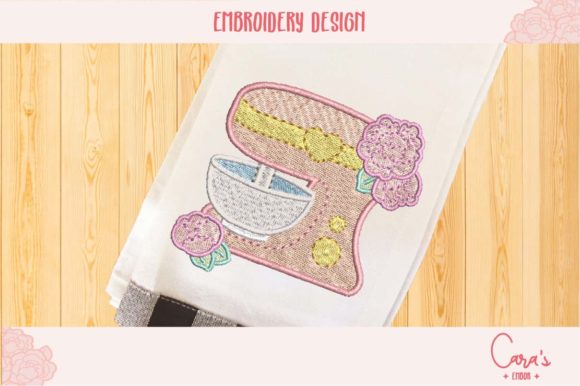
Peony Mixer: A Designer’s Review for Branded Merch
First Impression: A Soft, Spring-Ready Statement
When I first opened the Peony Mixer digital embroidery file, the immediate feeling was fresh and welcoming. This isn’t a loud, busy design. It reads as a gentle invitation — exactly what you want for a small business that values warmth, hospitality, and a handmade touch. The description promises it will “invite spring right into your kitchen,” and visually, it delivers a clean, floral motif that feels equally at home on a rustic apron or a modern boutique tote bag. For an embroidery designer, the first question is always: Can this hold its own as a brand asset? With Peony Mixer, the answer is yes, but with a few production notes every shop owner should know.
Visual Personality and Brand Identity Potential
Peony Mixer leans into a classic, almost nostalgic garden aesthetic without becoming fussy. The peony is soft, approachable, and inherently feminine, but the “mixer” element suggests a subtle kitchen or culinary tilt. It’s not a literal stand mixer — it’s the name itself that evokes the idea of blending beauty and function. This makes it a smart choice for brands that want to communicate handmade quality, craftsmanship, and a warm, personal connection. Think of a small bakery, a florist, a tea shop, or a boutique grocer. The design sits perfectly between elegant and playful, which means it can lift a plain chef’s coat into something memorable or turn a simple canvas pouch into a gift that feels curated.
Embroidered Patches for Boutique Branding
One of the most immediate uses I see for Peony Mixer is as an embroidered patch. If you run a small business — a café, a craft studio, a specialty food brand — a patch featuring this design can be stitched onto staff hats, denim work aprons, or even the spine of a branded notebook. The floral shape reads clearly at patch size, but I’d recommend testing it at a minimum of 2.5 to 3 inches wide to preserve the petal detail. Anything smaller, and you risk losing the delicate definition that makes this design feel premium. For Etsy sellers or craft businesses, a patch version becomes a standalone product: a sew-on accessory that customers can add to their own jackets or bags.
Apron Embroidery That Elevates the Everyday
The product description explicitly mentions aprons, and this is where Peony Mixer feels most natural. On a solid canvas or twill apron, the design can be placed as a chest accent, a pocket detail, or even a larger back panel statement. I’ve stitched out similar floral motifs on hospitality aprons before, and the key is thread color contrast. If the apron is dark, you’ll want to sample the design with lighter, slightly brighter thread choices to keep the spring vibe alive. On a light linen or soft gray apron, a more muted palette can feel beautifully artisanal. Just be mindful of stitch density on heavily textured fabrics; a dense design on a coarse weave can pull or pucker without the right stabilizer. Always test on the exact fabric your business will use.
Cap and Hat Embroidery: A Delightful Sleeve Detail
For caps, Peony Mixer works best as a side or back accent rather than a full front logo. The floral shape fits nicely on a curved cap side panel, but machine embroidery on caps always demands careful hooping. Because the design has rounded, organic edges, it won’t fight the hat’s curvature as much as a rigid geometric logo would. Still, I’d advise against using it as a front-and-center design on a structured cap unless the stitch count is confirmed low enough to avoid distortion on the seam. A smaller, simplified version — perhaps just the peony bloom — could be a perfect cap patch.
Tote Bags, Kitchen Towels, and Table Linens
This is a design that truly shines on flat, medium-weight textiles. Tote bags, tea towels, and table runners all provide a smooth canvas. For a small business, an embroidered tote bag with the Peony Mixer design becomes a walking advertisement. It’s practical, reusable, and the floral theme adds a touch of charm that a plain logo can’t match. When stitching onto linen or cotton kitchen towels, remember that these items are washed frequently. Use a high-quality polyester thread that won’t fade, and always include a soft backing to protect the stitches from abrasion. The design’s stitch density should be balanced enough to survive laundry cycles without becoming stiff or scratchy — a real concern for items that touch skin or food surfaces.
Real Case Scenario: A Small Bakery’s Branded Merch
Imagine a neighborhood bakery called “Petals & Pies.” They want to unify their staff look and sell a few branded items on the counter. The Peony Mixer design becomes their secret ingredient. On the baker’s apron, it’s stitched in soft peach and sage green, matching the shop’s interior. On a canvas tote, it’s offered as a limited-edition gift with purchase. On a cap, it’s a subtle side detail that sparks conversation. The design gives the bakery a consistent, recognizable mark without feeling corporate. In this scenario, the embroidery file serves as a brand asset that ties together uniforms, packaging, and customer touchpoints. That’s the kind of quiet power a well-chosen floral design can bring to a small business.
Practical Embroidery Designer Notes: What to Test Before Production
As much as I love the Peony Mixer concept, a professional machine embroidery designer never trusts a file without a test stitch-out. Here’s what I would check before offering it to a client or using it on my own merchandise:
- Run a black-and-white test first. Strip the color away. If the design still reads clearly in monochrome, it has strong composition. This is especially important for brands that may want to print it on packaging or use it in a single-color embroidery on a dark uniform.
- Check small patch size viability. Reduce the design to 2 inches wide and stitch it out. Does the peony still look like a peony, or does it turn into a blob? If details close up, you’ll need a simplified version for small branding applications.
- Review thread color contrast. The original file likely comes with a recommended palette. But every fabric is different. Test on light, medium, and dark backgrounds. Adjust thread colors if necessary so the design doesn’t disappear or look muddy.
- Inspect the stitch spacing and density. Overly dense areas can cause puckering, especially on lightweight fabrics. The description doesn’t mention stitch count, so you’ll need to check the file’s properties once you open it. A well-digitized floral design should have enough breathing room to keep the fabric soft.
- Confirm hoop size. This design might fit a 4x4 hoop, but if it’s larger, you’ll need to know before you buy. Always verify the required hoop dimensions with the supplier, as the product description doesn’t specify them directly.
- Test on real fabric. Don’t rely on a sample stitch-out on polyester twill. Test on the actual apron, tote, or towel you’ll use for production. Fabric texture, thickness, and stretch all affect the final look.
- Use the right stabilizer. For woven fabrics, a medium-weight cutaway stabilizer is usually safe. For knits or stretchy items, a no-show mesh or a fusible backing can prevent shifting. Always baste or hoop tightly.
- Create a printable mockup for client approval. Before you stitch a single piece, show the design digitally placed on a photo of the actual product. This prevents costly re-dos and keeps the client engaged in the decision.
- Compare it beside other design assets. If the business already has a logo, how does Peony Mixer sit alongside it? They should feel like a family, not competing styles. The floral quality can complement a wordmark beautifully if scaled correctly.
- Confirm commercial licensing. The product page doesn’t detail the license terms. Always check whether the purchase allows you to use the design on merchandise you sell. If you’re buying a digital embroidery file, you need explicit commercial use rights to stitch it onto items for resale. Contact the seller if it’s unclear.
How Peony Mixer Shapes Customer Trust and Recognition
When a small business uses a consistent, well-executed embroidery design across its products, something subtle shifts in the customer’s mind. The brand feels more polished, more intentional, and more trustworthy. The Peony Mixer design, with its gentle, spring-like feel, signals care and attention to detail. It tells customers that the business values quality — not just in its products, but in its presentation. A customer who sees this design on a bakery apron, then on a tote bag, then on a set of tea towels begins to associate that floral motif with a positive experience. That’s brand identity at work, and it’s one of the most cost-effective ways for a small business to build loyalty.
The Digital File Perspective: What to Look For
As a designer, I’m always thinking about the digital embroidery file itself. Is it well-digitized? Is the underlay properly set? The description doesn’t provide technical details, so I recommend opening the file in your embroidery software and checking the pathing. Watch for smooth trims, appropriate jump stitches, and logical color changes. A file that’s poorly digitized will waste time and thread, and it won’t give you a clean finished product. The Peony Mixer name suggests a design that should feel light and airy, so the digitizing should reflect that — not heavy, blocky fills. If the file doesn’t meet your standards, you may need to edit it or request a revision from the seller.
Creative Uses Beyond the Kitchen
While the product category is Kitchen and the description focuses on table cloths and towels, I see much broader potential. A creative studio could use Peony Mixer on zippered pouches for art supplies. A pet brand could stitch it onto bandanas or leash holders. A florist could add it to delivery driver caps or wrapping cloths. The design’s versatility is a major asset, and it’s one reason I’d recommend it to a wide range of handmade businesses. The key is to imagine it as a design asset that can be resized, recolored, and applied to different substrates — as long as the stitch properties allow it.
Final Thoughts for the Small Business Owner
Peony Mixer is not a loud, attention-grabbing design. It’s a quiet workhorse that brings a sense of spring and sincerity to whatever it touches. For a small business, that’s often more valuable than a flashy logo. It works beautifully on kitchen textiles, yes, but it also has the potential to become a signature mark on aprons, tote bags, caps, and even branded patches. Just remember to test it thoroughly, tweak the thread colors for your fabric, and always check the commercial license before you start selling. When treated with the care of a professional embroidery designer, this design can become a subtle but powerful piece of your brand’s visual story.